Your Guide to a Memorable Jungle Adventure
Ranthambore Travel Guide: Planning Your Safari
Prepare for your wildlife getaway with our Ranthambore Travel Guide. Explore seasonal travel advice, safari essentials, photography tips, and responsible visitor practices—all in one place to help you plan a comfortable and memorable trip.
Plan Before You Explore
Your Essential Ranthambore Travel Guide
From choosing your travel dates to packing for the jungle, find practical advice for your visit to Ranthambore National Park.
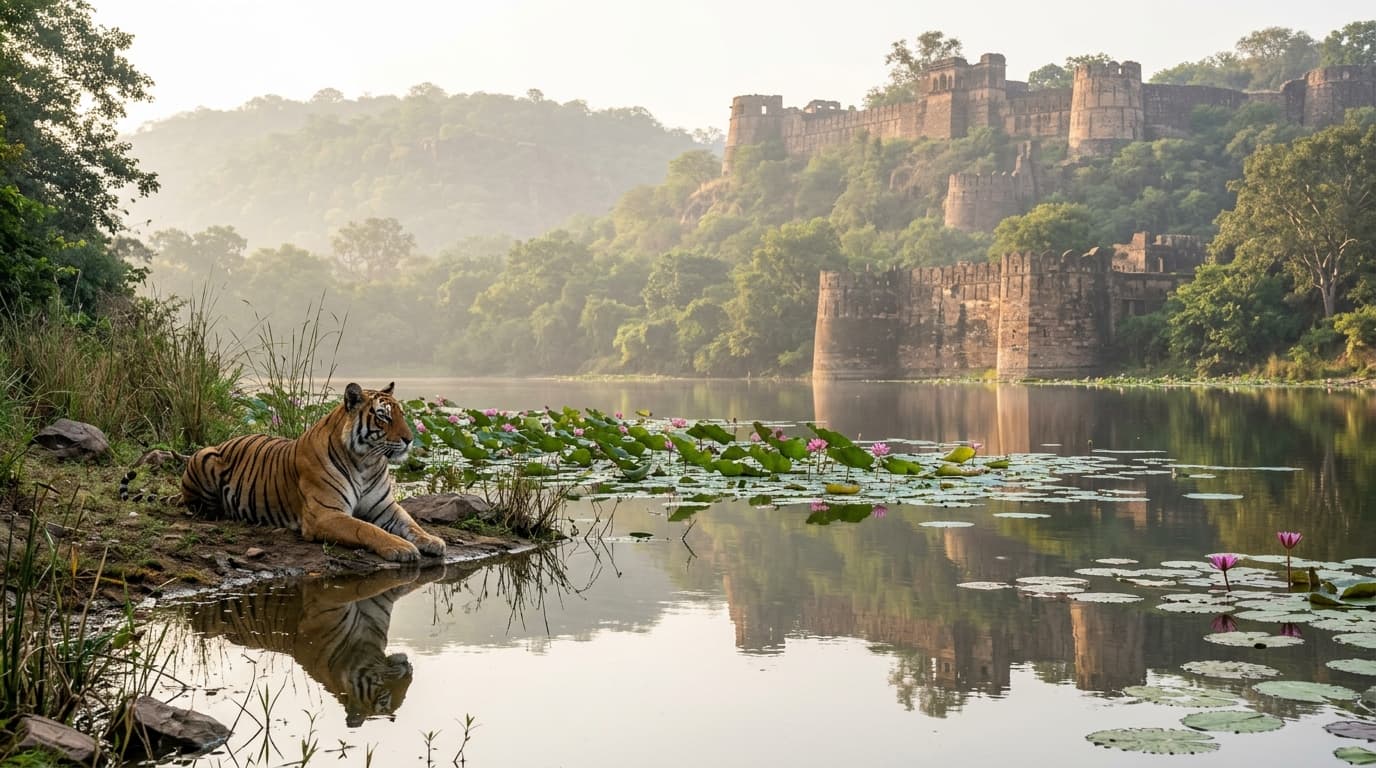
Seasonal PlanningBest Time to Visit Ranthambore: A Seasonal Guide
Compare cooler winter outings, warmer summer safaris, and seasonal access considerations. Choose travel dates that suit your comfort, interests, and itinerary.
4 min read
 Visitor Preparation
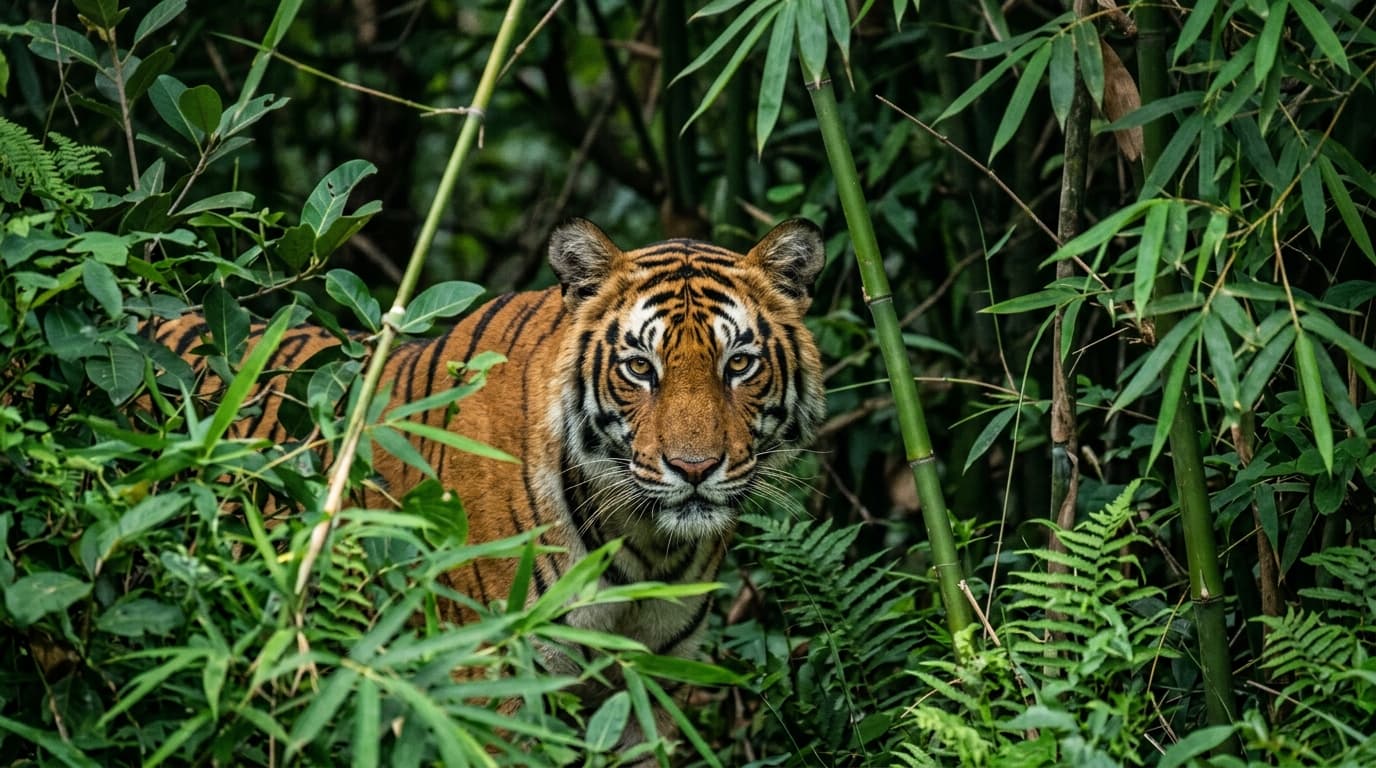
Ranthambore Packing List: What to Bring & Wear
Prepare for an open-air safari with comfortable clothing, weather protection, identification, and camera essentials. Use our checklist to pack with confidence.
3 min read
 Transit & Route
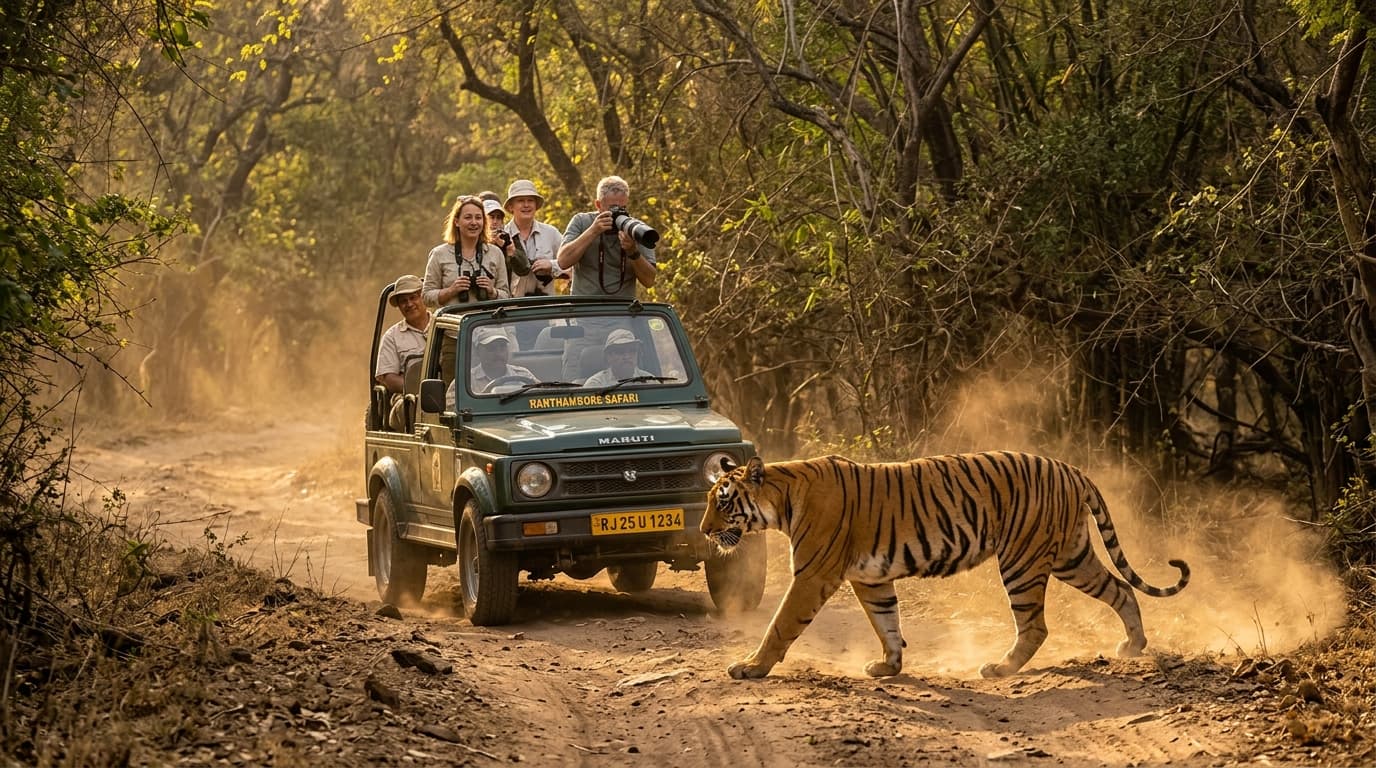
How to Reach Ranthambore: Plan Your Journey
Plan your arrival in Sawai Madhopur and coordinate onward travel to your accommodation. Allow enough time between your train or road journey and your booked safari.
5 min read
Choose Your Travel Season
Best Time to Visit Ranthambore
The best time to visit Ranthambore depends on your preferred weather and travel experience. Cooler months suit travellers seeking comfortable outdoor conditions, while summer visits require more preparation for the heat.
Post-Monsoon Opening
October to November
The park reopens with vibrant green foliage, waterfalls in ravines, and high lake water levels. Excellent for landscape photography and birding.
Lush Green & Pleasant (20°C - 30°C)
Peak Winter Season
December to February
Chilly morning safaris requiring warm fleece jackets. Tigers frequently bask in open grasslands, ruins, and sunny dirt tracks.
Crisp & Cold Mornings (8°C - 24°C)
Spring Transition
March to April
Palash trees (Flame of the Forest) burst into orange blossoms. As foliage thins, animal visibility across ravines and lakes increases.
Warm & Blooming (24°C - 36°C)
Peak Tiger Sighting Window
May to June
Water sources dry up, concentrating tigers near Padam, Rajbagh, and Malik Talao lakes. Unmatched predator action and photography opportunities.
Hot & Dry (35°C - 44°C)
Ranthambore Packing List & Safari Dress Code
Pack for an open-air vehicle, changing weather, and time spent seated on forest tracks. The clothing suggestions below are practical recommendations; follow any specific entry instructions provided with your booking.
Clothing Colors
- Earthy tones (Khaki, Olive Green, Muted Brown). Avoid bright red, neon, or stark white.
Weather Gear
- Heavy fleece jackets for winter mornings; light breathable cottons, sun hat & shades for summer.
Dust Protection
- Bandana / scarf / buff to cover nose & mouth from dirt tracks; dust cover sleeve for camera lens.
Optics & Tech
- Binoculars (8x42 or 10x42), telephoto lens (100-400mm or 70-200mm), extra memory cards and batteries.
Personal Care
- High SPF sunscreen, mosquito repellent, lip balm, rehydration electrolytes (ORS), and personal medicines.
Govt. Documents
- Original Government Photo ID (exact proof provided during online booking) is 100% mandatory.
Wildlife Photography Masterclass Tips
Capture the wildlife experience thoughtfully, from forest landscapes to unexpected animal encounters. These Ranthambore photography tips can help you prepare without disturbing the surroundings.
Lens Recommendation
A versatile 100-400mm or 150-600mm telephoto zoom is ideal. Tigers frequently cross right in front of the vehicle or walk across lake edges 80m away.
Bean Bag Stabilization
Tripods are prohibited inside safari vehicles. Bring an unfilled bean bag to rest your telephoto lens smoothly on the Gypsy safety rail.
Shutter Speed & Shaded Light
Keep shutter speeds above 1/1000s for moving animals. Raise ISO to 1600–3200 under dense Dhok canopy and early morning low-light shifts.
Responsible Ecotourism
Dos & Don'ts in the Tiger Reserve
Help protect Ranthambore’s wildlife and make the experience enjoyable for everyone. Follow current tiger reserve rules and the instructions of your assigned driver and guide.
Dos (Must Follow)
- Always follow the instructions of your assigned forest naturalist guide.
- Remain seated inside the vehicle at all times; disembarking is strictly forbidden.
- Keep your voice at a low whisper when an animal or tiger is sighted.
- Carry drinking water, hat, and sunglasses for open-top sun exposure.
Don'ts (Strictly Prohibited)
- Do NOT litter or throw plastic bottles/wrappers inside the national park.
- Do NOT use camera flash or make loud noises to provoke wildlife.
- Do NOT play music, blow horns, or carry pets into the reserve.
- Do NOT smoke or ignite fires anywhere within the protected forest area.
Direct Wildlife Concierge
Get an Instant Safari Quote & Availability Check
Share your travel dates, group size, and preferred Gypsy or Canter safari. Our team will check availability and help you choose the right Ranthambore safari or tour package with a personalized quote.
Phone Helplines:
Instant WhatsApp Support:+91 7877761315 (Click to Chat)
Privacy Assurance: Your contact details and travel dates are strictly used for your safari quotation. We never share visitor info with third parties or marketing spammers.